QR codes and a simple loyalty program for tourists can really increase regional traffic. See how the Brodnickie JO model works in the Brodnickie Lake District in 2026.
In 2026 QR codes stop being just a “clever link to a page”. In local tourism they become the key to loyalty programs that actually increase traffic in the region, extend guests' stays and connect individual venues into a coherent offer.
In the Brodnickie Lake District the Brodnickie JO project shows how to combine QR codes, a loyalty program for tourists and a shared regional portal to answer the question: how to increase regional traffic with QR and data, not just advertising?
Why QR codes and loyalty work in local tourism
QR codes are today as natural to a tourist as Wi‑Fi. A phone camera is enough to:
- open a place's page,
- redeem a discount or reward,
- log a visit in a loyalty program.
This is especially important in local tourism because:
- A tourist moves between many points – accommodation, restaurant, rental, attractions. QR codes allow these places to be “linked” into a single experience path.
- Loyalty is built during the stay, not after – if the tourist is already in the region, it's easier to encourage them to visit more nearby places.
- Data from QR show real behavior – instead of guessing what works, we see where the tourist actually was, what interested them and what triggered a benefit.
In the Brodnickie JO project QR codes are a “gateway” to benefits and at the same time a tool that helps the whole region better understand tourist flows.
Simple benefit formats: discounts, free product, early check-in
A loyalty program for tourists doesn't have to be complicated. The most effective are simple, easy-to-understand benefits that can be communicated in one sentence at reception or on a menu.
1. On-site discount
Examples:
- Accommodation: “Scan the JO code – get 10% off your next stay during the low season.”
- Food & Beverage: “Scan the JO code and get 5% off a dessert or coffee with your meal.”
- Attractions: “After scanning the JO code – 10% off a family ticket.”
Why it works:
- easy to understand,
- simple to communicate,
- quickly measurable (how many discounts were activated via QR codes tourism 2026).
2. Free product or service
Examples:
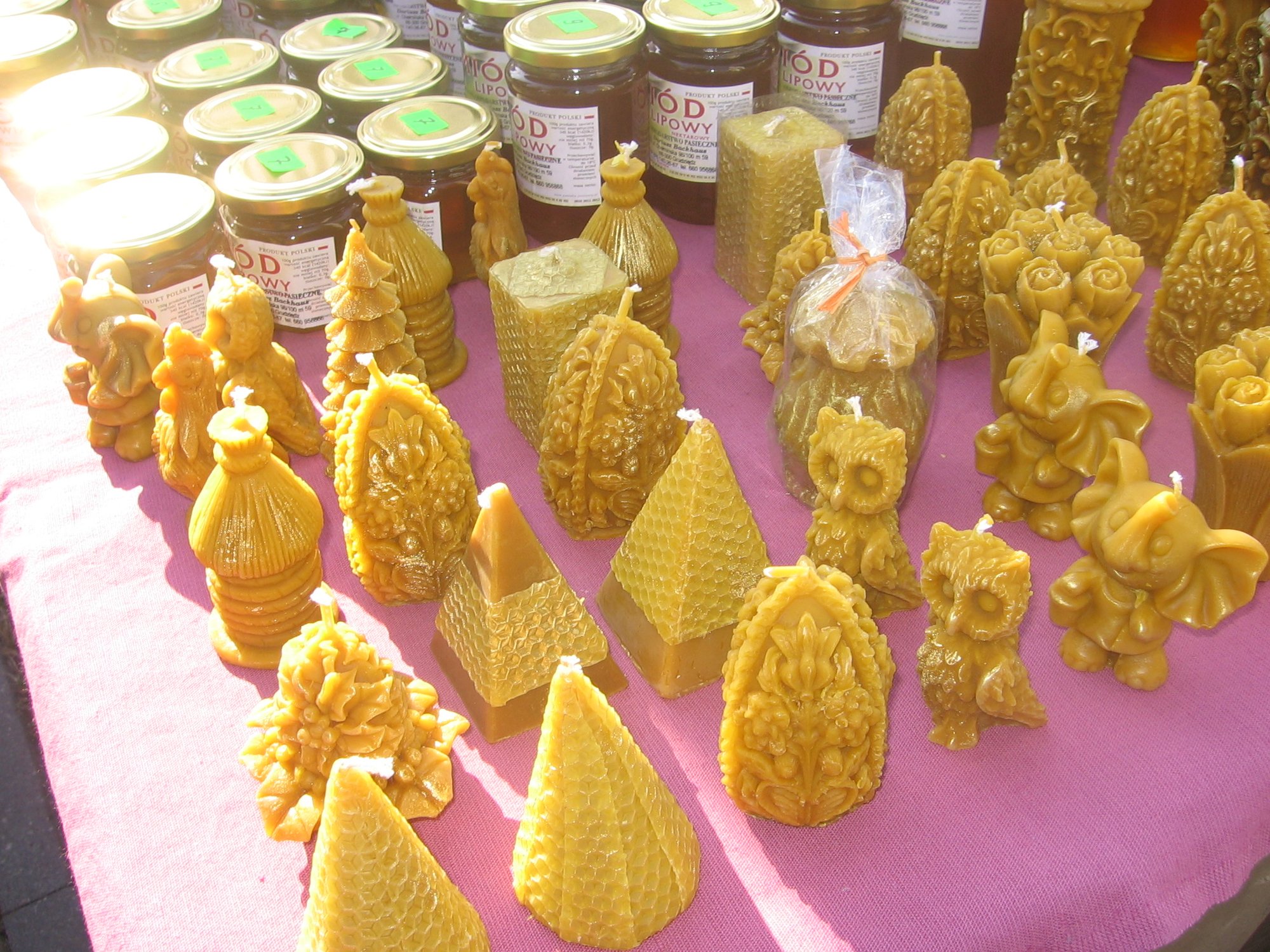
- Local product: a small jar of honey, a bookmark with a local motif, a postcard with a trail map.
- Service: 30 minutes of kayak time free with a minimum 2-hour rental, a free audio guide for the area.
This works especially well in regions that want to emphasize locality and authenticity – like the Brodnickie Lake District.
3. Early check-in or late check-out
For accommodation providers this is one of the simplest and most appreciated benefits:
- early check-in (e.g. from 13:00 instead of 15:00),
- late check-out (e.g. until 12:00 instead of 10:00),
- flexible arrival time during weekdays.
It can be tied to activity in the region:
- “If during your stay you scan JO codes in at least 3 places (e.g. restaurant, attraction, rental), on your next stay you will receive a free late check-out.”
4. Benefit after several visits
This is a classic loyalty mechanism, but applied to the entire region, not just a single venue:
- “Visit 5 JO locations and receive a local gift or a discount on JO 48 (a ready weekend itinerary).”
In the Brodnickie JO project each partner can propose their own benefit format, and the system helps arrange them into a coherent path for the tourist.
Technical implementation: code generation and portal integration
Good news: from a technical standpoint QR codes are simple. The key is where they lead and how they are tied to the regional portal.
How a QR code is created in Brodnickie JO
- A partner creates a profile on the Brodnickie.io / JO portal (accommodation, food & beverage, attraction, etc.).
- They fill in details: description, photos, map location, opening hours, type of venue.
- They declare a JO benefit: e.g. discount, free product, early check-in.
- The system generates a unique QR code linked to the partner's profile and their benefit.
- The partner receives print-ready files (PDF, PNG) and instructions on where and how to place them.
Where to place QR codes
- at the entrance to the venue (door, window),
- at reception or the ticket desk,
- on tables in a restaurant,
- on printed materials (leaflets, maps, posters),
- in rooms (accommodation) – e.g. on a card with regional information.
It's important that a short note about the benefit always accompanies the code, for example:
“Scan the JO code – receive a discount or local benefit at this place and discover the next points on the map of the Brodnickie Lake District.”
Integration with the portal and app
In the Brodnickie JO model a QR code doesn't lead only to the venue page. After scanning the tourist:
- sees the place profile (description, photos, hours, reviews),
- can activate the benefit (e.g. discount, free product),
- receives recommendations for next places nearby (JO 48, JO Przygoda),
- logs the visit in their “stay journal” (history of visited places).
Thanks to this, every QR scan becomes part of a larger story of the region stay.
Use cases: accommodation, food & beverage, attractions
Accommodation
Example 1: Lakeside guesthouse
- JO benefit: early check-in or late check-out for guests who visit at least 2 other JO places.
- How it works:
- The guest arrives and scans the QR code at reception.
- The system shows them 3 nearby JO places (restaurant, rental, attraction).
- After scanning codes at at least 2 of them, on the next stay the guest receives flexible check-in/check-out times.
Example 2: Family agritourism
- JO benefit: a free local product (e.g. a jar of jam) after scanning the code.
- Additionally: recommendations for family attractions within a 15 km radius.
Food & Beverage
Example 3: Restaurant in the town center
- JO benefit: 5% off a dessert with the purchase of a main course.
- QR code on tables and in the menu.
- After scanning the tourist sees:
- the restaurant description,
- information about the discount,
- suggestions for evening activities (a walk, viewpoint, local event).
Example 4: Café by the bike trail
- JO benefit: a free refill of coffee or water for patrons who arrived by bike (verified by staff).
- QR code on the bike rack and at the counter.
Attractions and activities
Example 5: Kayak rental
- JO benefit: 30 minutes of kayak time free with a minimum 2-hour rental.
- QR code at the ticket desk and on posters in cooperating accommodations.
- After scanning the tourist also receives a suggested JO Przygoda route (e.g. “Weekend on the water and in the forest”).
Example 6: Museum or regional exhibition
- JO benefit: discount on a family ticket or a free audio guide.
- QR code at the entrance and on promotional materials.
- The system suggests other places related to the region's history.
In each of these cases QR codes tourism 2026 are not just technology but a concrete reason to enter, stay longer and return.
How to measure effectiveness: data, analysis and AI recommendations
Without data a loyalty program is just a “nice extra”. With data it becomes a tool for real management of regional traffic.
What data the JO system collects
- number of QR code scans at a given place,
- times of day and days of the week when scans are most frequent,
- tourists' paths: where they came from and where they went next,
- which benefits are most often activated (discount, product, service),
- average number of places visited during a single stay.
What can be inferred from this
- Which places are “magnets” – they generate the most follow-up visits.
- Where the flow stops – the tourist ends the path and doesn't proceed to other points.
- Which benefits work best – e.g. whether a small discount or a free local product performs better.
The role of AI in analysis and recommendations
AI support (as in the Brodnickie JO project) allows to:
- automatically detect popular routes and propose them as JO 48 or JO Przygoda,
- suggest to partners changes in benefits if current ones don't attract tourists,
- advise how to increase regional traffic with QR – e.g. which places to link with mutual recommendations,
- generate reports for municipalities and the region: seasonality, occupancy, potential for new products.
This way promotion, investment and new attraction decisions are based on real guest behaviors, not just intuition.
Step by step for a JO partner: from profile to active code
What does the process look like for an entrepreneur who wants to join Brodnickie JO and use QR codes tourism 2026 in practice?
Step 1: Register for the I Tourism Forum
- You fill in the registration form on the Brodnickie.io website.
- You receive confirmation of registration and information about the forum's date, place and program.
- Participation in the forum does not oblige you to join the JO project – it's an informational stage.
I Tourism Forum — Brodnickie Lake District
- Data: 21 października 2026 (środa)
- Time: 10:00
- Location: GOKSiR w Zbicznie, ul. Młyńska 6, 87-305 Zbiczno
Step 2: Learn about the Brodnickie JO project
At the forum you will learn:
- why the region needs a shared JO portal,
- how partner profiles and QR codes work,
- what benefits a loyalty program for tourists can bring to your venue,
- what JO 48 and JO Przygoda itineraries look like.
After the forum you decide for yourself whether you want to join.
Step 3: Register your venue in JO
If the project interests you:
- you register your venue (accommodation, food & beverage, attraction, rental, etc.),
- you fill in basic details and describe your offer,
- you declare a specific JO benefit for tourists.
Step 4: Receive your profile and QR code
- The Brodnickie.io team creates your JO Partner profile on the portal.
- You receive a unique QR code linked to your profile and benefit.
- You get printable materials and a short guide for communicating with guests.
Step 5: Place the code and communicate on-site
- You know where it's best to place the code (entrance, reception, tables, rooms).
- You inform guests with a simple message, e.g.:
- “Scan the JO code and receive a benefit at this place”,
- “Scan the code to discover more places in the Brodnickie Lake District”.
Step 6: Analyze results and develop the offer
- In the partner panel you see basic statistics (scans, benefit activations, tourists' paths).
- Based on this you can:
- modify benefits (e.g. change a discount to a local product),
- better tailor your offer to real guest behavior,
- cooperate with other JO partners (mutual recommendations, joint routes).
Summary: QR + loyalty = a stronger region
QR codes in local tourism in 2026 are not a fad but a practical tool that:
- helps tourists discover the region,
- allows partners to build loyalty and increase revenue,
- provides municipalities and operators with real data about tourist traffic.
The Brodnickie JO project in the Brodnickie Lake District combines these elements into one system: a shared portal, a map, a loyalty program for tourists and QR codes that lead guests from place to place.
If you create tourism in the region (accommodation, food & beverage, attractions, rentals, events) and want to know how to increase regional traffic with QR, data and collaboration, sign up for the I Tourism Forum — Brodnickie Lake District at https://brodnickie.io and see how JO can work for your venue.